
Join Us!
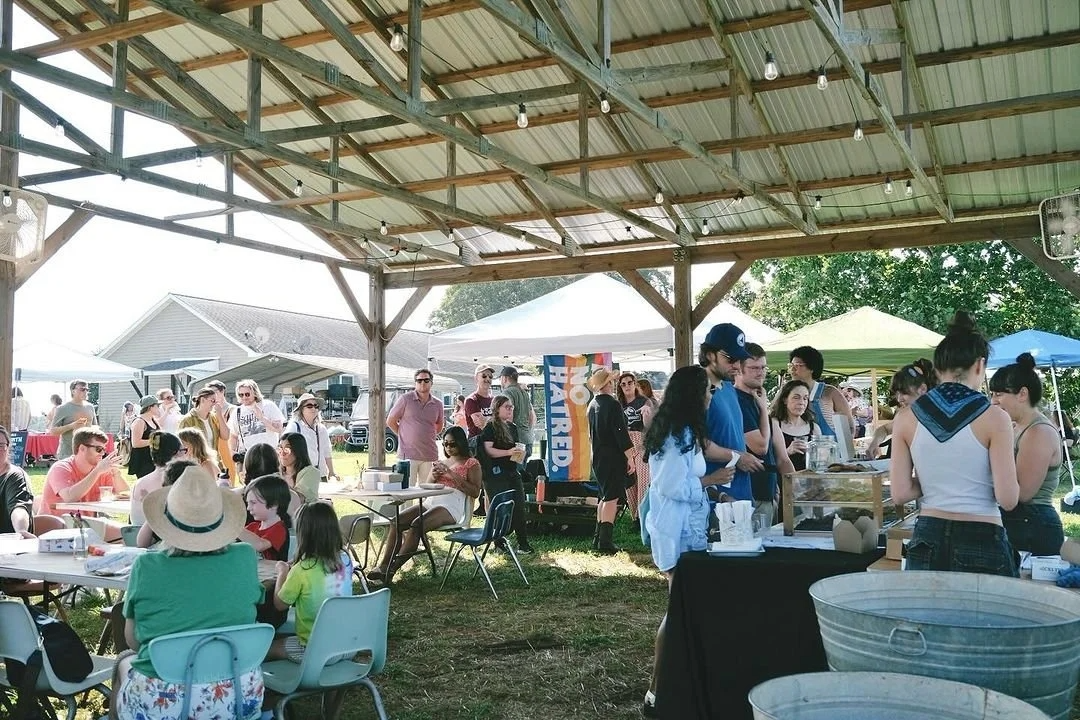
We hope you will join us at our next WNC Food Coalition event!
We also use this calendar to share what’s happening in our broader WNC community. If you have an event you would like us to post to our calendar, please fill out this form and send it to us at least three weeks in advance. Thank you!
Locations:
Resources
Community Pantries
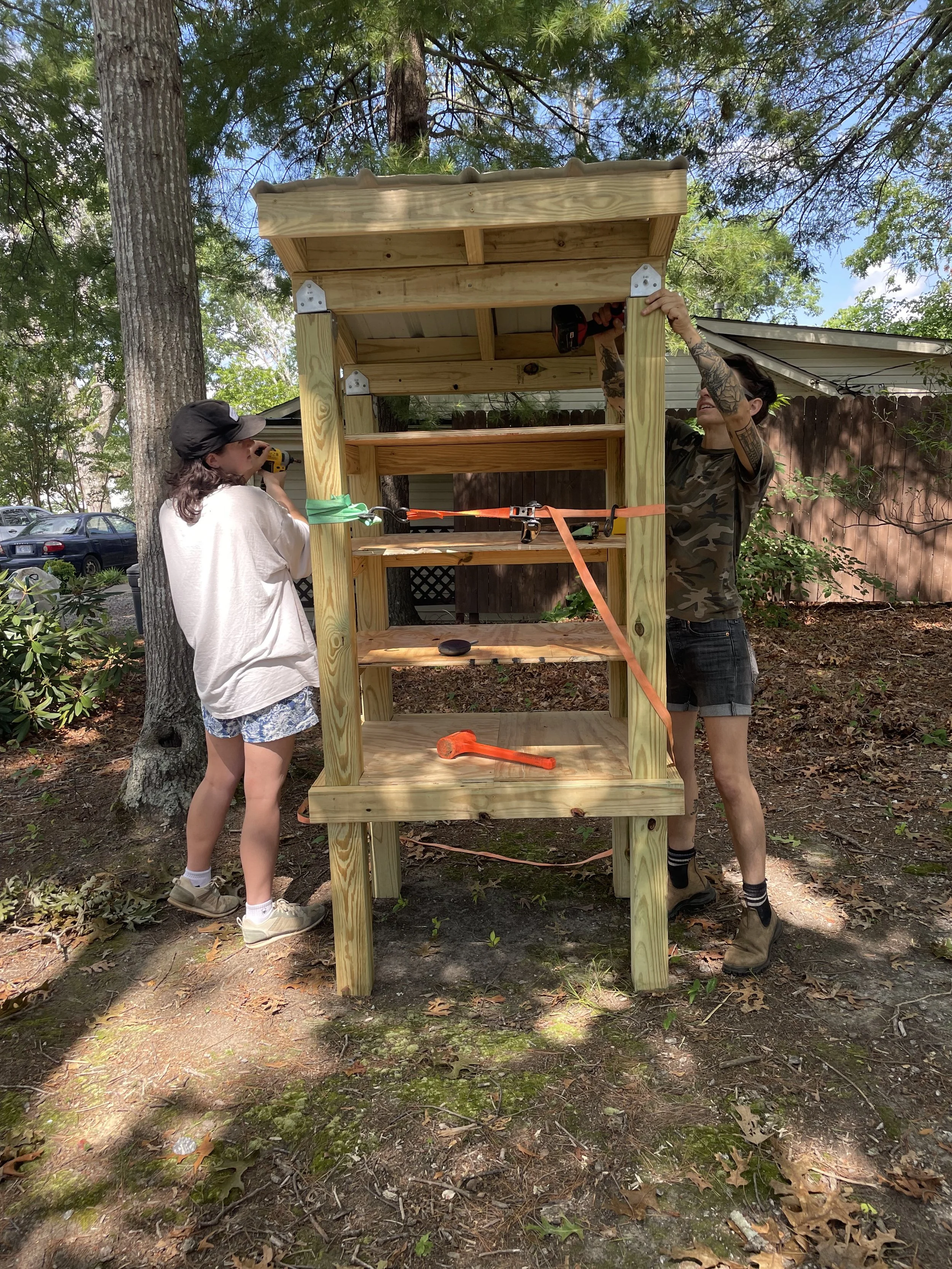
Our FREE Community Food Pantries are open to everyone! No paperwork, no ID, no income requirements, no questions asked. Whether you’re experiencing food insecurity or simply need a little extra support, our pantries are designed to meet your needs.
These pantries operate on a mutual-aid model: take what you need, no limits, and give what you’re able. They’re community-owned and community-supported spaces, stocked with nutritious food so that neighbors across Western North Carolina can access healthy meals without barriers.
Our mission is to make sure that no one goes hungry simply because of paperwork or eligibility hoops. When people can access food freely and openly, we strengthen community bonds and build a more equitable, compassionate food system for all.
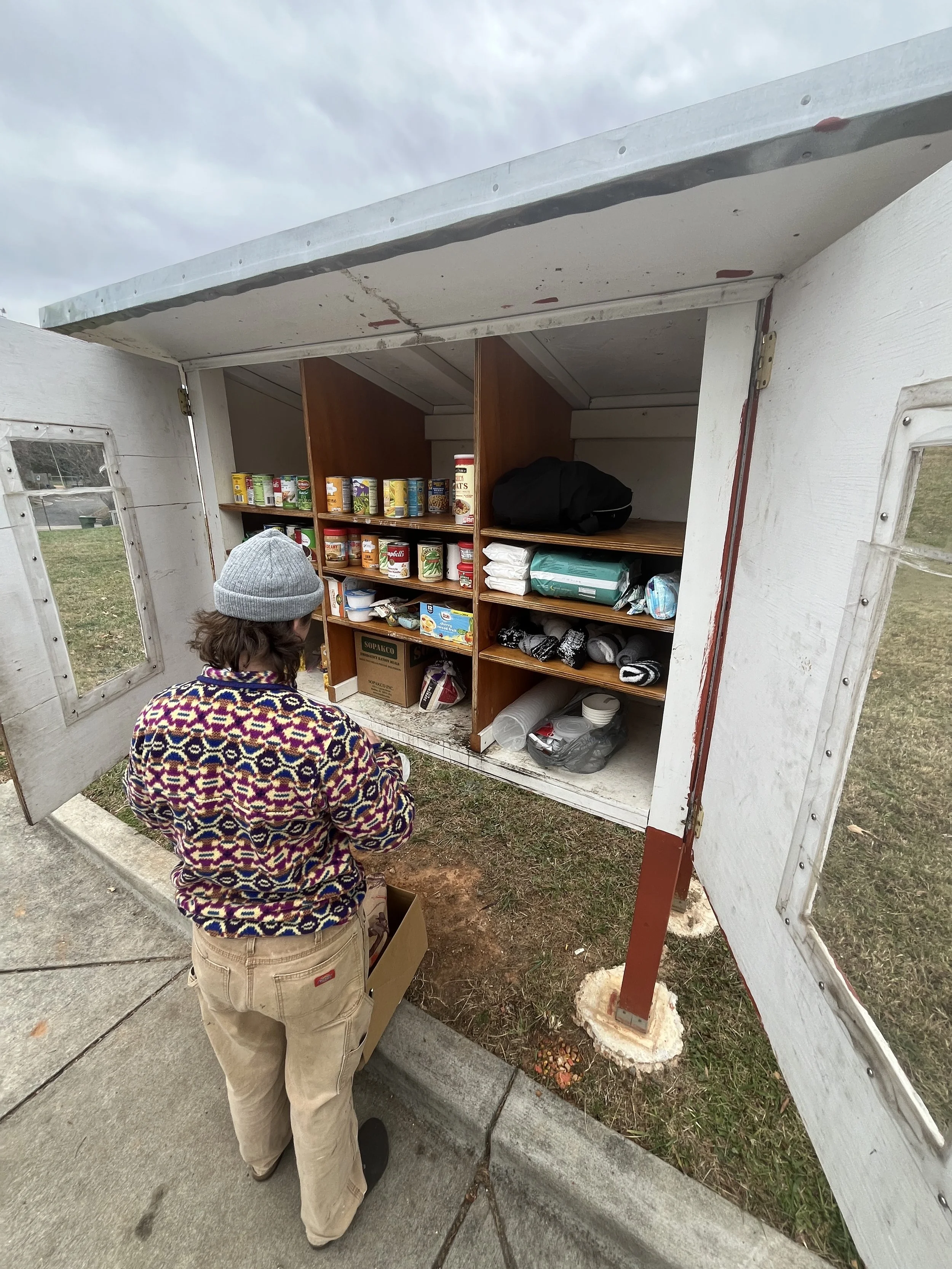
Palm & Pine: 178B Westwood Pl, Asheville, NC 28806
Full Circle Community Wellness: 1915 George St, Hendersonville, NC 28792
Budgie’s Bakeshop: 1808 Pisgah Hwy, Candler, NC 28715
Macon County Public Library: 149 Siler Farm Rd, Franklin, NC 28734
Blue Ridge Health: 131 Walnut St, Waynesville, NC 28786
Blue Ridge Health: 44 Bonnie Lane, Sylva, NC 28779
Otto Community Center: 60 Firehouse Road, Otto, NC 28763
Ashbury Church: 8289 Georgia Rd, Otto, NC 28763
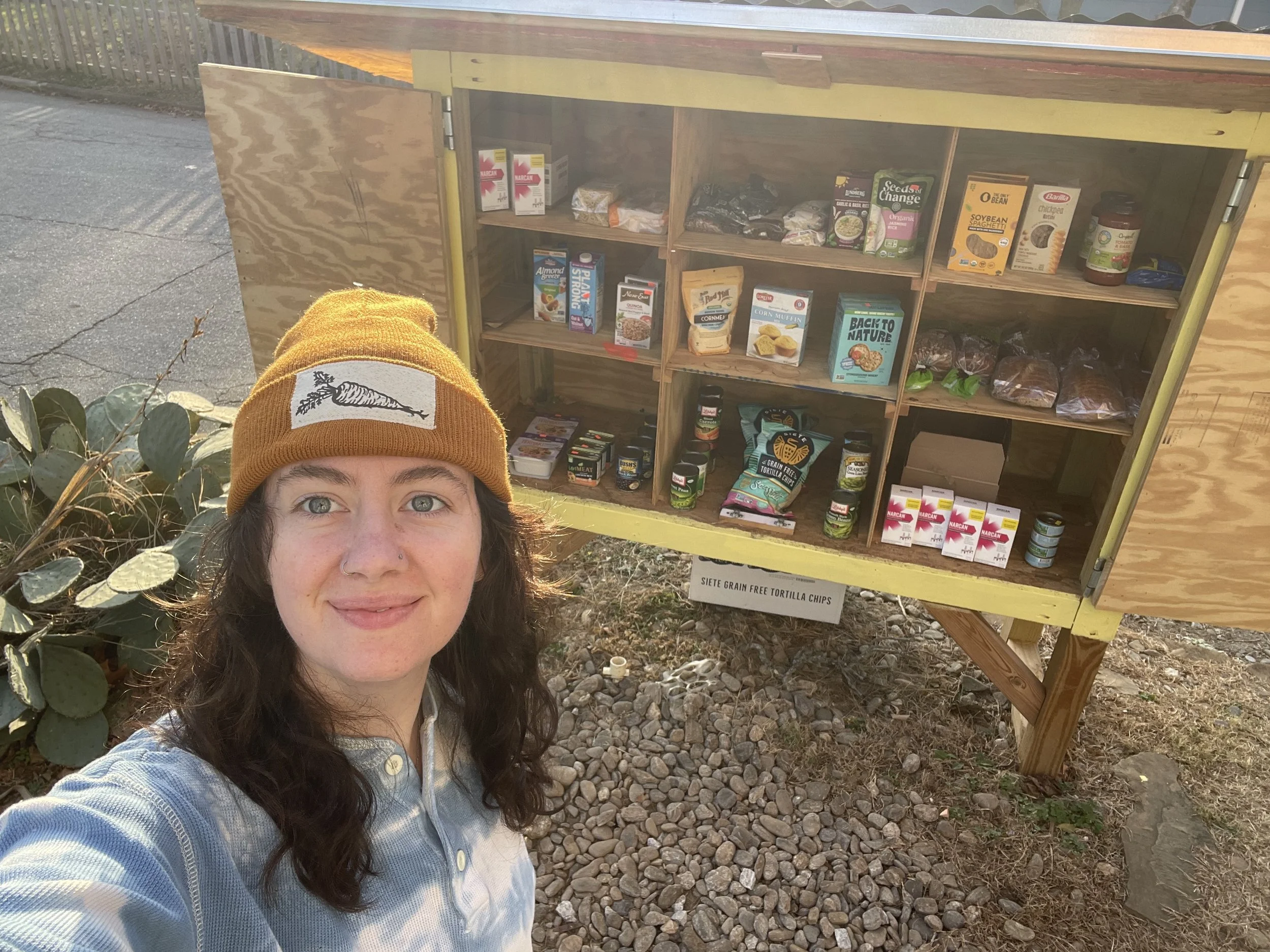
Disaster Preparedness & Response: Field Kitchen and Community Meal Safety
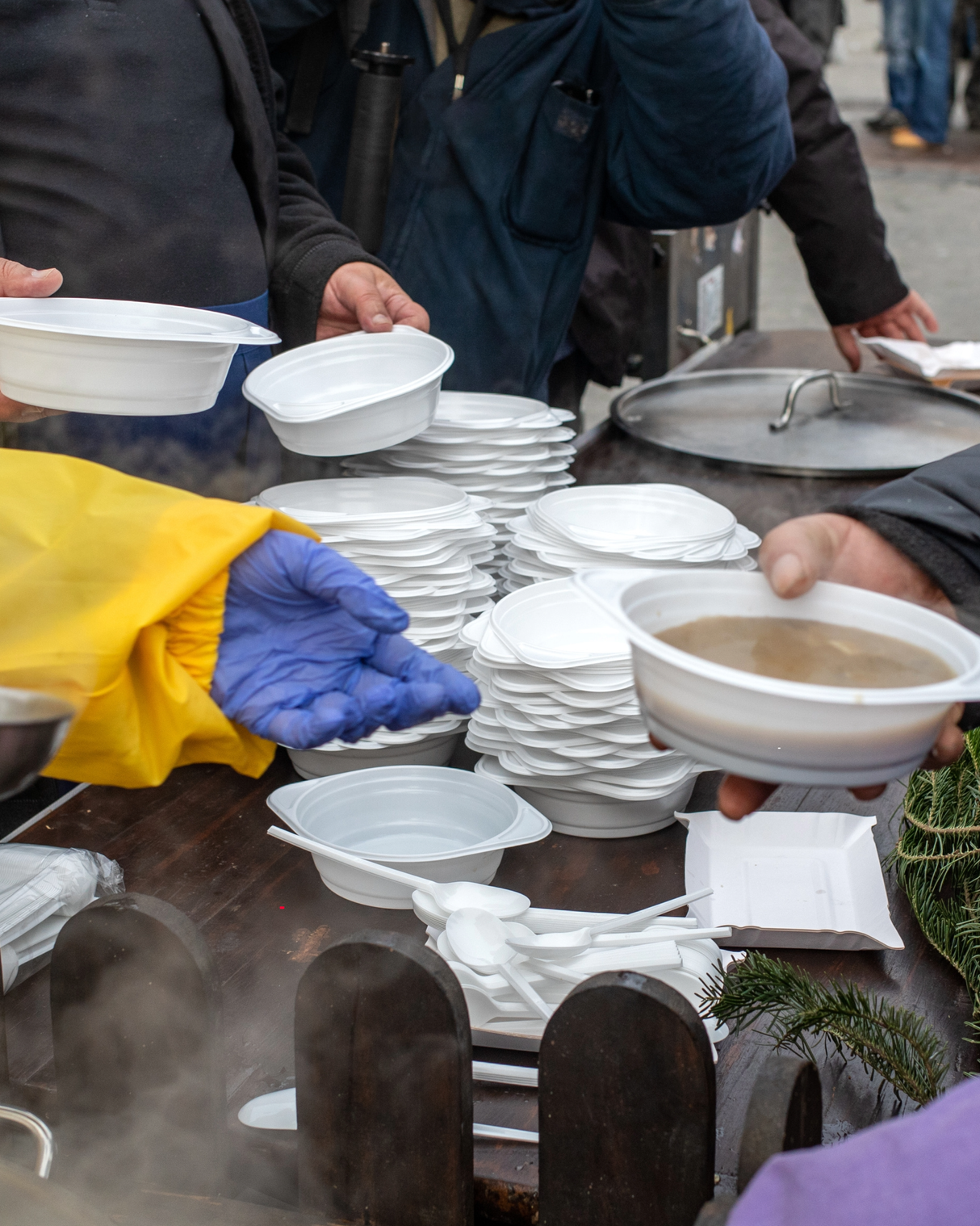
Expand each item for cooking safety best practices when in settings with non-potable water, settings with fixed kitchen equipment, and settings with neither. We encourage consulting with your local Health Department for further guidance on best practices to ensure health and safety standards.
-
Where possible, get the support of a ServSafe certified professional to advise on the setup of a field kitchen and equipment.
Hand sanitizer should not be used as a substitute to handwashing. This is a great DIY handwashing station that uses things that can be found at Lowes.
If no usable drains are available for gray water, a trench can be dug to receive the water and debris. Dig as far away from the dishpit as possible to keep pests and insects away. Catchment systems can be fashioned from a mesh wastepaper basket inside a large bin that's regularly emptied or has a drainage pipe installed. The mesh basket can then be scraped out into a compost system.
If a three compartment sink is not available, fashion a Wash, Rinse and Sanitize station with 5 gallon buckets or rubbermaid containers. Scrape dishes clean first to keep water usable longer.
Off-grid dish pits can be set up with IBC totes, an rv/camping pump run off a car battery and the materials to convert the larger threads of the tote to the smaller fittings of the pipes. Food grade hoses can also be configured as plumping options where pex may not be ideal. Check the max temp rating for food grade hoses if using a hot water setup.
-
Wearing disposable gloves for ready to eat foods as well as handling raw meat can drastically reduce risk of illness. Still wash hands after handling raw meat and removing gloves.
In areas where water is limited, use bottled or sanitized water and disinfect cooking surfaces and tools using sanitizing wipes or a diluted bleach solution (typically, one tablespoon of bleach per gallon of water*).
*Many commercially available bleaches are highly concentrated, so it's easy to overdo it. Water shouldn't feel "slippery". Using BLEACH STRIPS is recommended. Bleach can be a turn off for folks, but it's one of the easiest, safest and accessible sanitizers. Use COOL water, as warm can evaporate the bleach.
Paper towels can feel wasteful, but also eliminate a lot of cross contamination risk.
-
Invest in thermometers both for coolers and for checking cook temps.
After food is prepared, store and transport it in insulated containers to maintain safe temperatures: hot foods should be kept above 140°F, cold foods below 40°F, and meats are cooked to the appropriate temperatures (165°F for poultry, 145°F for beef).
Be very mindful of insects and keeping food covered at all times. In these conditions, it may not be advisable to save leftover prepped food if there is any concern about exposure to pest, hands or the inability to bring it quickly down or back up to a safe temperature. Here's an easy temperature guide for cooking. Temperature guide for cooling foods.
-
Food Connection, an incredible Asheville area non-profit and food rescue expert has additional expertise in repackaging and serving food after it has been cooked.
Finally, see this USDA resource for re-heating, storing and distributing cooked food safely.
ASAP recently published a great list of kitchen tips for folks at home without water. Here are a few more tips for those working in field kitchens and feeding large numbers of community members and volunteers. Thanks to World Central Kitchen for their contributions to this post.
WNC Food Resource Map
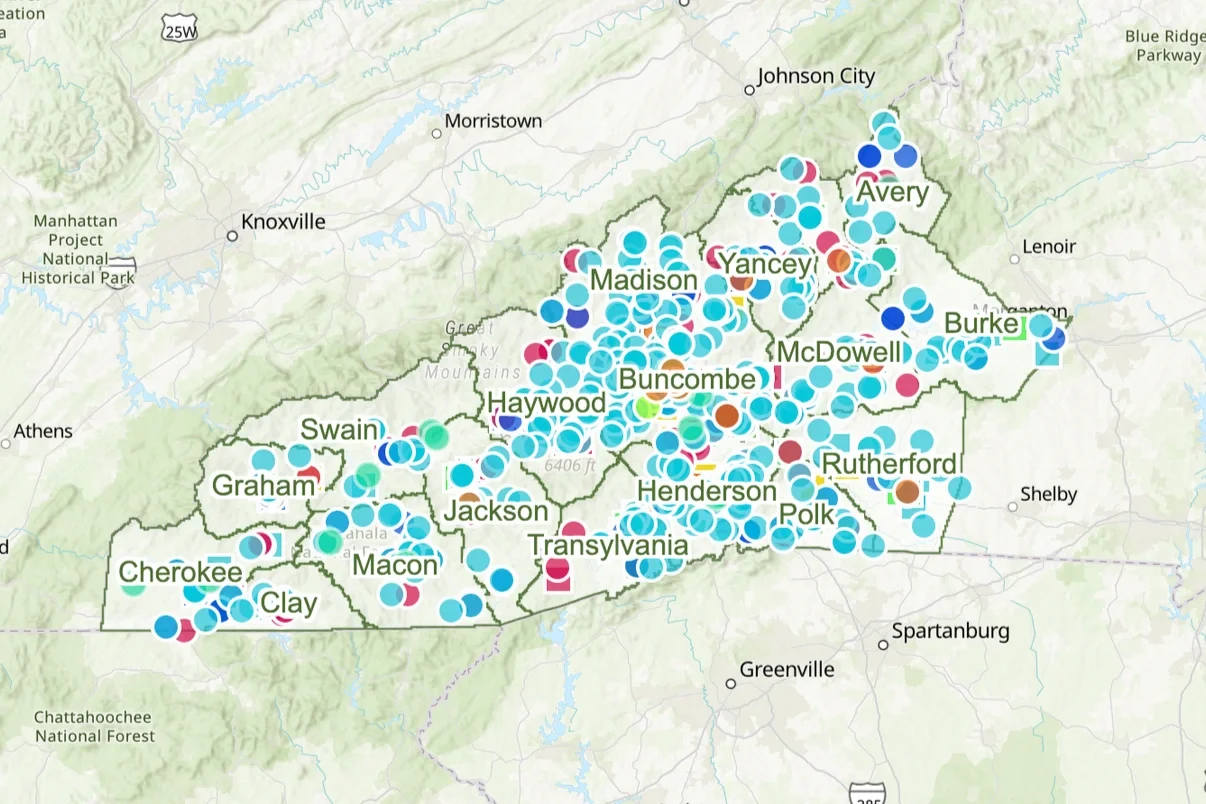
This WNC Food Resource Map is a collaborative, community sourced collection of the food system assets across our 19 county region.
Click the map to access this interactive resource.

Regional Support & Opportunities
To add something to this page, fill out this Google Form.
-
Bounty & Soul
Cooperate WNC
Root Cause Farm
Carolina Flowers
Organic Growers School
Volunteer Opportunities
Bounty & Soul:
Eliada:
Foothills Foodhub Volunteers (McDowell County)
-
Helene Relief Funding - Deadline June 12
Grant-Writing Support:
-
-
Buncombe: The Stephens-Lee Rec Center, Asheville
Buncombe: The Burton St Rec Center, Asheville
Buncombe: The Linwood Crump Shiloh Rec Center, Asheville
Buncombe: Southside Community Garden Pavilion, Asheville
Buncombe: The Giving Garden at the Leicester Library, Asheville
-
Queer Farmer Network (Google Group)
National Latino Farmers and Ranchers: Training and Technical Assistance
National Young Farmers Coalition - Loan application assistance and advocacy
National Cooperative Business Association
National Black Growers Council
Inter-Tribal Agriculture Council
National Black Farmers Association
The Socially Disadvantaged Farmer and Rancher Policy Centre
-
Fill out the interest form if you have need for volunteers/farm-sitters or you’d like to become one.
-
-
Find your local food council using the WNC Resources Map.
NC Cooperative Extension Online Overview of Local Food Systems course
State and National Food Policy Networks
Food Council Toolkits and Guides
-
Healthy Food Project: Policy Drafting Companion Guide
Farm to School
National Farm to School Network : State Farm to School Policy Handbook
Farm to School Coalition of NC: Systems Change Working Group
Municipal/Community Composting
Community Gardens
Backyard Chickens
-
Composting, simplified - by Bountiful Cities
-